
You cannot know from symptoms alone whether you need IVF. IVF is usually recommended after a fertility assessment identifies a reason that natural conception or less invasive fertility treatments are unlikely to work, or when appropriate treatments have already been unsuccessful.
Examples include blocked or severely damaged fallopian tubes, significant sperm-related infertility, some cases of endometriosis, persistent ovulation problems, unexplained infertility after an appropriate period of trying, and situations where embryo genetic testing is required.
However, conditions such as PCOS, low AMH, increasing age or a few months of unsuccessful attempts do not automatically mean you need IVF.
The first question is usually not “Do I need IVF?” It is “Why has pregnancy not happened, and which treatment is appropriate for that specific reason?”
Current fertility guidelines recommend basing this decision on age, duration of infertility, ovarian function, fallopian tube status, semen analysis, medical history and previous treatment rather than using IVF as the default first treatment.
When Should I Have a Fertility Assessment?
A fertility assessment often comes before any decision about IVF.
For couples having regular unprotected intercourse, evaluation is generally recommended:
- after 12 months of trying when the female partner is under 35
- after approximately 6 months when the female partner is 35 or older
- more promptly when the female partner is over 40
- without waiting when there is a known condition that may affect fertility
ASRM recommends starting evaluation after 12 months for women younger than 35 and after 6 months from age 35, while more immediate assessment may be appropriate over age 40. NICE’s 2026 guidance also recommends earlier specialist referral from age 36 or when either partner has a known or suspected fertility factor.
You should also consider earlier assessment if there are irregular or absent periods, known endometriosis, previous pelvic disease, suspected fallopian tube problems, previous chemotherapy or radiation, or known sperm-related fertility problems.
Dr. Emad Darwish provides pre-IVF assessment and fertility testing as part of his fertility services, including evaluation of both partners before deciding which treatment is appropriate.
View Dr. Emad Darwish’s fertility and IVF services
What Conditions May Mean IVF Is Recommended?
There is no single test that says “you need IVF.” Doctors look at the complete fertility picture.
The following situations may make IVF more appropriate.
Blocked or Severely Damaged Fallopian Tubes
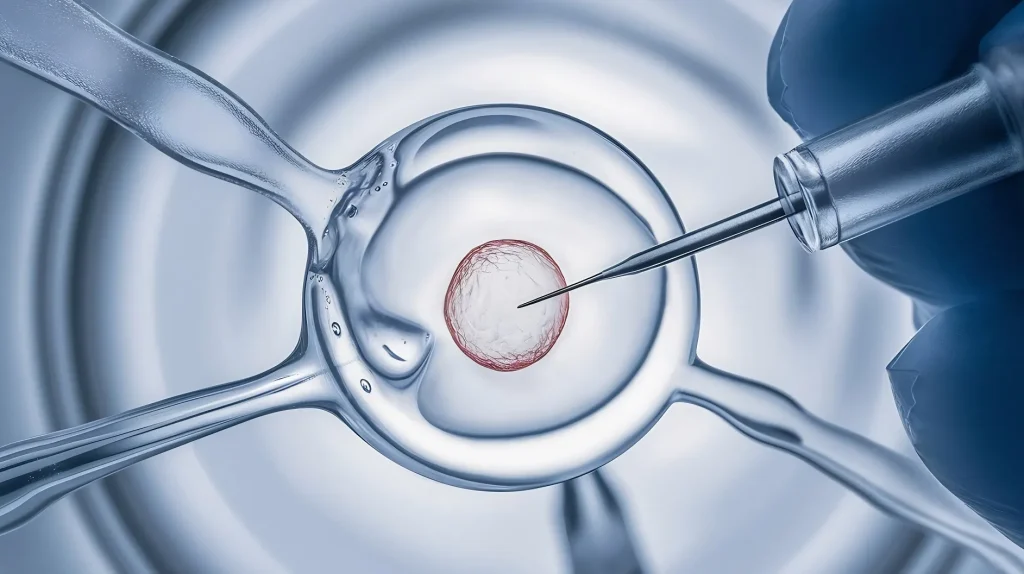
The fallopian tubes normally allow the egg and sperm to meet. IVF bypasses the tubes because eggs are retrieved from the ovaries and fertilized in a laboratory before an embryo is transferred to the uterus.
HFEA lists blocked or damaged fallopian tubes among the established reasons IVF may be recommended.
Whether IVF is needed depends on the location and severity of tubal damage. Some tubal conditions may have alternative management options, so tubal assessment is important before treatment is chosen.
Significant Male-Factor Infertility
Fertility problems can also originate from the male partner.
Semen analysis evaluates factors such as sperm concentration, movement and morphology. When a significant sperm-related problem is present, IVF may be performed with intracytoplasmic sperm injection (ICSI), in which an embryologist injects one sperm directly into a mature egg.
ICSI is particularly relevant in selected cases involving very low sperm numbers, poor motility, abnormal morphology, surgically retrieved sperm or previous fertilization failure.
An abnormal semen analysis does not automatically mean IVF or ICSI is required. The severity and persistence of the abnormality, alongside the female partner’s fertility assessment, affect the treatment decision.
Previous Fertility Treatments Have Not Worked
IVF may become appropriate after simpler treatment strategies have been tried without pregnancy.
Depending on the diagnosis, treatment before IVF may include ovulation management or intrauterine insemination.
The important point is that failed treatment does not mean every patient should automatically progress through the same sequence. Age, diagnosis and previous response can make IVF appropriate earlier for some patients and unnecessary for others.
NICE’s 2026 guidance recommends IVF when there is a diagnosed cause of infertility for which alternative treatments are unsuitable or have been unsuccessful.
Unexplained Infertility
Unexplained infertility means routine fertility investigations have not identified a clear reason pregnancy has not occurred.
It does not mean there is no fertility problem. It means currently available standard investigations have not identified the cause.
IVF can be considered in unexplained infertility, but it is not necessarily the immediate first treatment.
The 2026 NICE guideline recommends discussing IVF after an appropriate period of trying and considering individual circumstances. ESHRE also emphasizes that treatment selection in unexplained infertility should take age, duration of infertility and previous treatment into account.
Endometriosis
Endometriosis can affect fertility through several mechanisms, but having endometriosis does not automatically mean IVF is required.
Treatment decisions may depend on:
- age
- how long pregnancy has been attempted
- severity and symptoms of endometriosis
- ovarian reserve
- fallopian tube function
- sperm factors
- previous surgery or fertility treatment
NICE recommends individualizing fertility treatment for people with endometriosis and considering alternatives such as expectant management, surgery or IUI in appropriate cases before IVF.
Dr. Emad Darwish’s fertility services include assessment and treatment of endometriosis when fertility is a concern.
Ovulation Problems
Irregular or absent ovulation can make pregnancy difficult, but IVF is not automatically the first treatment.
Some ovulation disorders can initially be treated by addressing the underlying cause or using medication to induce ovulation.
HFEA notes that some people with ovulation or hormonal disorders may become pregnant with fertility medication and may not need a more invasive treatment such as IVF.
IVF may become appropriate when less invasive treatment is unsuccessful or when other fertility factors are present.
A Known Genetic Condition
IVF may also be required when embryos need to undergo preimplantation genetic testing for a specific inherited condition before transfer.
In these situations, IVF is necessary to create embryos in the laboratory so they can be tested before an embryo is selected for transfer.
Dr. Emad Darwish’s fertility services include preimplantation genetic testing for monogenic disorders, or PGT-M, in appropriate cases.
Quick Guide: Does This Mean I Need IVF?
|
Situation |
Does It Automatically Mean IVF? |
|
Trying for more than 12 months under age 35 |
No. It means a fertility assessment is appropriate |
|
Trying for 6 months at age 35 or older |
No. Earlier fertility assessment is recommended |
|
Age over 40 |
No, but prompt assessment is important |
|
Blocked or severely damaged fallopian tubes |
IVF may be strongly considered depending on the diagnosis |
|
Severe sperm abnormalities |
IVF with ICSI may be considered |
|
PCOS |
No. Many patients can begin with treatment directed at ovulation |
|
Low AMH |
No. AMH alone does not determine whether IVF is required |
|
Endometriosis |
Not automatically. Treatment depends on the overall fertility assessment |
|
Failed IUI cycles |
IVF may be the next option in selected patients |
|
Unexplained infertility |
IVF may be considered depending on age, duration and previous treatment |
|
Need embryo testing for an inherited disorder |
IVF is generally required to create embryos for testing |
Does Low AMH Mean I Need IVF?
No. A low AMH result by itself does not mean you need IVF.
Anti-Müllerian hormone, or AMH, is commonly used as a marker of ovarian reserve. It can help estimate how the ovaries may respond to stimulation during assisted reproduction.
It does not reliably predict whether someone can become pregnant naturally.
The 2026 NICE guideline specifically advises against using AMH to predict natural conception. It recommends AMH or antral follicle count to help predict ovarian response and support counselling when assisted conception is being considered.
This distinction matters.
A patient with low AMH may still ovulate and conceive naturally. Another patient with a normal AMH may have blocked tubes, severe male-factor infertility or another problem that makes IVF appropriate.
AMH should therefore be interpreted together with age, ultrasound findings, medical history and the rest of the fertility assessment.
Does PCOS Mean I Need IVF?
No. PCOS does not automatically mean IVF is necessary.
PCOS can cause irregular or absent ovulation, which may make conception more difficult. Depending on the individual situation, treatment can initially focus on restoring or inducing ovulation rather than moving directly to IVF.
IVF may be considered when appropriate first-line treatment has been unsuccessful or when additional fertility factors are present.
Dr. Emad Darwish’s fertility services include PCOS treatment and ovulation monitoring as well as IVF, allowing treatment to be selected according to the underlying fertility problem rather than assuming IVF is required from the beginning.
Does My Age Mean I Need IVF?
Age influences fertility and treatment decisions, but age alone does not automatically mean IVF is required.
Female fertility declines with increasing age, and age is an important predictor of reproductive potential. This is one reason fertility evaluation is recommended earlier as age increases.
The purpose of earlier assessment is not to send every patient directly to IVF. It is to avoid losing time before identifying whether there is a treatable fertility problem and which approach is most appropriate.
For some patients, age combined with the duration of infertility, ovarian reserve or another fertility diagnosis may make IVF more appropriate than spending additional time on treatments with a lower expected benefit.
Do Failed IUI Cycles Mean It Is Time for IVF?
Not necessarily after one failed cycle.
A failed IUI does not prove that IVF is required. Doctors usually consider the original diagnosis, number of previous treatment attempts, age, sperm results, ovarian response and duration of infertility.
However, repeated unsuccessful treatment can change the balance between continuing IUI and moving to IVF.
For unexplained infertility specifically, current guidance emphasizes individualized decisions rather than using the same number of IUI cycles for every patient.
Dr. Emad Darwish offers both IUI and IVF among his fertility services.
What Tests Are Done Before Deciding on IVF?
A fertility specialist should first identify the factors that may be interfering with conception.
Depending on the patient’s history, assessment may include:
- Medical and reproductive history
This includes how long pregnancy has been attempted, previous pregnancies, menstrual history, medical conditions, operations and previous fertility treatment. - Ovulation assessment
Menstrual regularity and selected hormone testing can help determine whether ovulation is occurring normally. - Ovarian reserve assessment when appropriate
AMH or antral follicle count may help predict response to ovarian stimulation, particularly when assisted reproduction is being considered. - Ultrasound examination
Ultrasound can assess the ovaries and uterus and identify findings that may influence fertility management. - Fallopian tube assessment
Tests such as hysterosalpingography may be used to determine whether the fallopian tubes are open. NICE recommends HSG as an appropriate screening test for tubal occlusion in patients without certain pelvic conditions. - Semen analysis
Male fertility assessment should generally occur alongside female evaluation when a male partner is contributing sperm.
The purpose of these tests is not simply to approve someone for IVF. It is to identify which treatment solves the actual fertility problem.
Explore pre-IVF assessment and fertility services
When Might I Not Need IVF?
IVF is an important fertility treatment, but it is not the right first step for every patient.
You may have other appropriate options if the main problem involves:
- irregular ovulation that responds to treatment
- a hormonal condition that can be managed
- a fertility issue suitable for IUI
- a potentially treatable reproductive condition
- a relatively short period of trying to conceive with no identified fertility problem
HFEA specifically notes that not everyone needs IVF and that some ovulation problems, for example, can be treated with medication alone.
Avoiding unnecessary IVF matters because IVF requires ovarian stimulation, monitoring, egg retrieval and laboratory treatment. Although IVF is generally safe, it is more invasive than many other fertility options and carries potential risks such as ovarian hyperstimulation syndrome and multiple pregnancy if more than one embryo is transferred.
What If All My Fertility Tests Are Normal?
Normal initial test results do not always mean fertility is normal.
When both partners complete standard investigations and no clear cause is found, the diagnosis may be unexplained infertility.
Treatment is then guided by factors such as:
- age
- how long you have been trying
- previous pregnancy history
- previous fertility treatment
- personal treatment preferences
IVF is one possible option, but the decision should be individualized.
How Does a Fertility Specialist Decide If IVF Is Right for Me?
A fertility specialist does not normally make the decision based on one number or one diagnosis.
The main questions are:
What is preventing or reducing the chance of natural conception?
Can that problem be treated effectively without IVF?
How much time is reasonable to spend on alternatives given the patient’s age and reproductive history?
What has happened with previous treatments?
How are the ovaries likely to respond to IVF stimulation?
The answers determine whether IVF should be considered now, after another treatment, or not at all.
NICE’s current IVF recommendations reflect this approach, advising IVF when there is a diagnosed fertility problem for which other treatment is inappropriate or unsuccessful, or after specified periods of unresolved infertility.
What Happens If IVF Is Recommended?
If IVF is considered appropriate, treatment usually includes:
- Ovarian stimulation
- Monitoring of follicle development
- Egg retrieval
- Fertilization in the laboratory
- Embryo development
- Embryo transfer or embryo freezing
- Pregnancy testing at the appropriate time
Conventional IVF allows prepared sperm and eggs to fertilize in the laboratory. In selected cases with significant sperm-related factors or previous fertilization problems, ICSI may be used as the fertilization method.
The exact IVF protocol depends on the individual diagnosis, ovarian response and treatment plan.

Do I Need IVF or Just a Fertility Assessment?
If you are asking yourself, “Do I need IVF?”, the most useful next step is usually a fertility assessment rather than deciding on treatment before the cause is known.
Assessment may show that IVF is appropriate.
It may also show that another treatment is more suitable.
Dr. Emad Darwish provides fertility assessment, IVF, ICSI, IUI, ovulation management and related reproductive medicine services, allowing treatment planning to begin with diagnosis rather than assuming every fertility problem requires IVF.
If you have been trying to conceive without success, have a known fertility condition, or have already undergone fertility treatment without pregnancy, an individualized assessment can help determine the most appropriate next step.
Book a fertility appointment with Dr. Emad Darwish
You can also contact the clinic directly to discuss an appointment.
Medical disclaimer: This content is intended for general educational purposes and does not replace individualized medical assessment. Fertility treatment recommendations depend on medical history, test results, age, reproductive goals and other individual factors.
FAQ
How do I know for sure if I need IVF?
You usually need a fertility assessment before knowing whether IVF is appropriate. Doctors evaluate age, ovulation, fallopian tubes, ovarian reserve when relevant, semen results, previous pregnancies and previous treatment before recommending IVF.
How long should I try naturally before considering IVF?
IVF is not automatically recommended simply because pregnancy has not occurred. Fertility evaluation is generally recommended after 12 months of regular unprotected intercourse for women under 35 and after approximately 6 months from age 35. Earlier assessment is appropriate when there is a known fertility problem or at older reproductive ages.
Can I need IVF even if I have regular periods?
Yes. Regular cycles suggest that ovulation is likely occurring, but fertility also depends on factors such as fallopian tube function, sperm quality, age and other reproductive conditions. Regular periods therefore do not rule out infertility.
Does low AMH mean I should start IVF immediately?
No. Low AMH alone does not determine whether IVF is needed. AMH is mainly useful for estimating ovarian response during assisted reproduction and should be interpreted alongside age and the rest of the fertility assessment.
Do blocked fallopian tubes mean I need IVF?
IVF may be recommended when significant tubal damage prevents the egg and sperm from meeting naturally. However, the exact treatment depends on whether one or both tubes are affected, the type of blockage and other fertility factors.
Do I need IVF if my husband has a low sperm count?
Not always. Treatment depends on how abnormal the semen results are and whether other fertility factors are present. Significant male-factor infertility may lead to IVF with ICSI, while less severe abnormalities may have other treatment options.
Does PCOS usually require IVF?
No. Many patients with PCOS have ovulation problems that can initially be managed without IVF. IVF may be considered when appropriate treatment has not worked or when other fertility factors are present.
Should I have IVF after failed IUI?
Possibly, but there is no universal number of failed IUI cycles that means every patient must move to IVF. Age, diagnosis, duration of infertility and previous response to treatment should guide the decision.
Can all fertility tests be normal and I still need IVF?
Yes. Some couples are diagnosed with unexplained infertility when standard investigations do not identify a specific cause. IVF may eventually be considered depending on age, duration of infertility and previous treatment.
Is IVF always the last option?
No. IVF can be considered earlier when there is a clear medical reason that makes less invasive treatments unsuitable, such as certain severe tubal or sperm-related fertility problems. In other cases, simpler treatment may appropriately come first.




تواصل معنا
تواصل معنا اليوم للحصول على الاستشارة المتخصصة، وحجز موعد، والدعم المناسب لاحتياجاتك خلال رحلة علاج تأخر الإنجاب وتحقيق حلم الأبوة والأمومة